
Hot water heater
Correct planning of hot water heaters
Hot domestic water has become an integral part of our daily lives and is essential in every building: whether in a residential property, an office block, or a hospital, hot domestic water is required everywhere, e.g., for showering, washing hands, cooking, or cleaning processes. However, the heating of drinking water poses hygiene risks if the design and technology are not precisely coordinated. Legionella, stagnation, and fluctuating temperatures are common problems. On this page, we provide you with expert knowledge on the preparation of hot domestic water. Find out what matters most when it comes to planning and which systems offer a safe, energy-efficient solution.
What exactly does a hot water heater do?
Hot water heater – also referred to as domestic water preparation – refers to the process by which potable water cold (PWC) is heated to a higher temperature using appropriate technical equipment, in order to provide it for use as potable water hot (PWH).
It is not just a matter of meeting the daily demand for hot water. The heating process also plays a key hygienic role: To minimise the risk of microbial contamination – particularly from Legionella – specific temperature ranges must be strictly adhered to and adequate circulation (PWH-C) must be ensured.
More about hot water circulation
The selection and sizing of suitable water heaters depend on various factors, such as the size of the building, usage patterns, and the applicable standards and regulations.
Regulatory requirements for protection against Legionella
Hygiene plays a key role in the design and installation of water heaters. This is because standing (stagnant) water or temperatures within the critical range can lead to an explosive proliferation of Legionella – bacteria that can cause serious health problems. Legionella bacteria thrive in temperature ranges from 25°C to 55°C. To minimise this risk, clear regulatory requirements apply (including DVGW W 551 and DIN 1988-200):
- At least 60°C at the outlet of the water heater
- At least 55°C at all tapping points in central systems
Only by consistently adhering to these requirements can operational safety, the protection of drinking water, and user comfort be guaranteed in the long term.

Operator liability: Operators must ensure a hygienically safe operation at all times!
Anyone who operates drinking water systems has a responsibility: for hygiene, health and system efficiency – and also a legal one! This is because, in the event of health risks posed by microbiological contamination – such as Legionella – the operator is obliged to be able to demonstrate at all times that the system is operated in a hygienically safe manner.
In practice, however, hygiene issues often arise:
- Water sits in pipes or storage tanks for too long – this leads to stagnation, providing an ideal breeding ground for germs.
- Temperatures that are too low in the system encourage the growth of Legionella bacteria.
- Oversized or poorly designed storage tanks lead to persistently critical operating conditions.
Attempts are often made to resolve these issues retrospectively using thermal disinfection. However, this is energy-intensive and does not address the root cause. On the contrary: This often further increases the bacteria’s heat resistance (solar pasteurisation). Long-term hygiene safety can only be achieved through forward-thinking planning and professional sizing of hot water heaters – with a clear focus on actual requirements and in compliance with recognised technical standards.
An overview of system concepts: centralised and decentralised hot water heaters
Drinking water is heated to the desired temperature at a central location – for example, in a storage tank system or via direct DHW stations – and supplied throughout the building via a distribution network. The hot water supply, HWS, is provided via a PWH system, which may include a connected circulation pipe (PWH-C) to ensure availability at all tapping points.
Advantages:
- Consistently high energy efficiency, even with changing requirements
- Reduced maintenance effort with a centralised unit
Challenges:
- Hygienic sizing of the entire system to prevent stagnation
- Ensuring a consistently hygienically safe temperature (e.g., ≥ 60°C at the outlet, ≥ 55°C at the tapping point)
- Design and operation of an effective hot water circulation system, including hydraulic balancing
Here, the drinking water is heated directly at the point of use – for example, in individual flats, or directly at the tapping point using electric instantaneous water heaters, flat-specific units or small storage tanks.
Advantages:
- Minimised risk of stagnation during intended use thanks to short pipe runs
- Hot water circulation is often not required
Challenges:
- Higher energy consumption when using multiple single units
- Capacity bottlenecks may occur if several tapping points are used simultaneously (peak load)
- More complex maintenance due to decentralised technology in each plumbing unit (limited accessibility across multiple plumbing units)
Comparison of centralised hot water heaters
There are three systems to choose from for centralised hot water heaters. Which option is right for you depends on hygiene requirements, energy efficiency, hot water needs, and your investment framework.
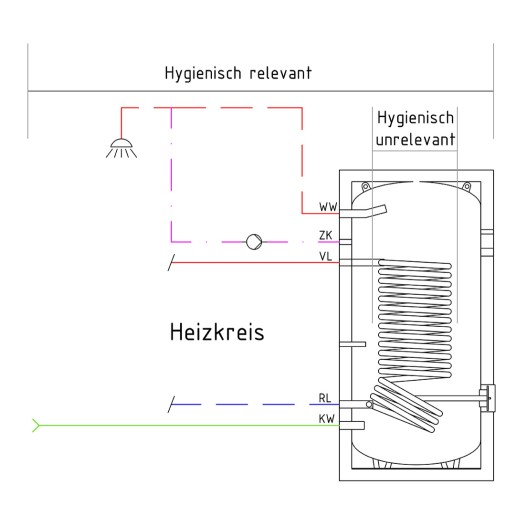
DHW tank
A simple, cost-effective solution – particularly for smaller applications with modest hot water requirements.
Advantages:
- Low investment costs
- Simple hydronic design
- Low pressure loss during operation
Disadvantages:
- Limited continuous thermal output and heat transfer surface area
- Minimal temperature differential in the heating circuit
- Uneven heating (lack of stratification)
- Hygiene risks due to stagnation, limescale build-up, and temperature zones
- Inaccurate control due to usually having only one temperature measurement point
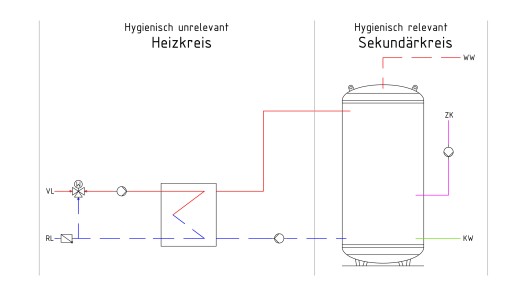
Storage loading systems
These combine DHW tanks with an external heat exchanger – for higher output and control stability during periods of high consumption.
Advantages:
- Constant PWH outlet temperature
- High peak draw-off capacity
- Good temperature differential in the heating return
- Seamless integration of, e.g., district heating
Disadvantages:
- Storage of large quantities of domestic hot water (hygiene risk)
- Regular maintenance (e.g., cleaning)
- No stratification in the storage tank (uneven outlet temperature)
- Complex reheating with high circulation flow rates
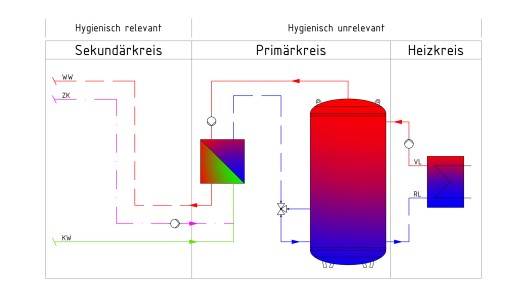
Direct DHW stations
A hygienic, efficient solution based on the continuous flow principle – with no storage tank, digital control, and flexible system integration.
Advantages:
- Maximum drinking water hygiene (no stagnation, no dead zones)
- Hot water on demand – no storage losses in the drinking water
- Constant PWH outlet temperature, even with fluctuating demand
- High peak draw-off capacity enabled by high-performance stations
- Excellent temperature differential in the heating circuit
- Integration of CHP, district heating, or buffer tanks is possible
- Energy is stored in the heating water – not in the domestic cold water system
- Low maintenance (no storage tank, no anode)
- Digital features (depending on the model): Live monitoring, optimisation, predictive maintenance
Disadvantages:
- Comparatively higher pressure loss than in hot water tanks
- Requires slightly more space (depending on the model)
The hygiene benefits of direct DHW stations – a deep dive into the "why"
Demand-orientated sizing ensures high flow velocities in the system – especially in the plate heat exchanger and in the downstream pipework. This reduces deposits, prevents dead zones and increases the degree of turbulence, which in turn improves transmission efficiency. Flow velocities in accordance with DIN 1988-300 and the DVGW Code of Practice form the basis for permanently hygienic operation.
Intelligent hydraulic balancing technology and sensors that are in contact with the water ensure a constant outlet temperature over the entire load range – regardless of the draw-off quantity. The result: thermal safety, high user comfort and minimised energy consumption. Control of the DHW circulation pumps ensures stable temperature conditions in the hot water system.
Direct DHW stations do not store drinking water, but only heat it when required. This means there is no risk of stagnation. In combination with a minimum nominal capacity and a low dead zone design, the entire water volume is completely exchanged even with the smallest draw-offs. This means that direct DHW stations reliably fulfil the hygiene requirements of DIN 1988-200 and DVGW W 551 – and set standards in terms of drinking water protection.
In contrast to classic hot water tanks, direct DHW stations realise energy storage in the heating circuit on the primary heating side and not in the drinking water side. This significantly reduces the volume of domestic hot water and minimises hygienic risks at the same time.
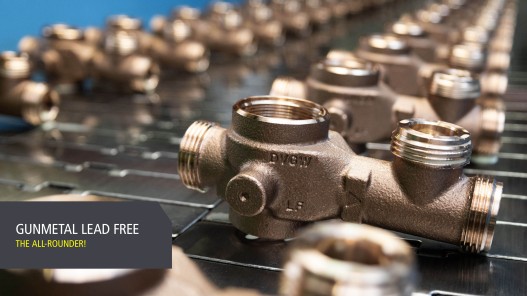
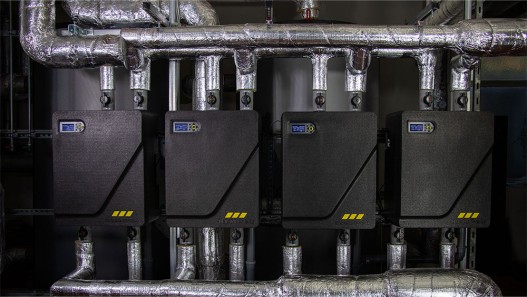
Modern direct DHW stations – especially the KTS Water Heaters PRO from KEMPER – rely on hygienically optimised materials such as gunmetal (e.g., Rg+). Gunmetal is considered corrosion-resistant and can be combined with almost all other materials. Gunmetal is of a higher quality than products made of brass and, unlike the latter, is approved for drinking water installations in Germany and Europe without any restrictions. As there is no zinc (Zn) in gunmetal, no dezincification can take place when used in drinking water. The gunmetal structure therefore remains almost constant for years. Gunmetal maintains its integrity in both hot and cold water systems. It has proven its worth over decades in plumbing technology, particularly in territories with aggressive water conditions. It falls well below the strict legal limits for the release of metal ions.
Change in fluid category in accordance with DIN EN 1717 when heating drinking water
DIN EN 1717 classifies domestic hot water differently from cold drinking water: As changes in temperature can alter sensory properties such as smell or taste, the classification changes from Category 1 to Category 2.
- Fluid category 1 = Water intended for human consumption, taken directly from a drinking water installation
- Fluid category 2 = Fluid that is suitable for human consumption and does not present a hazard. This includes water from a drinking water installation that may exhibit a change in taste, smell, colour, or temperature (heating or cooling) – e.g., coffee/water dispensers, building water entries, or water heaters
KEMPER – Your partner for hygienic water heaters
As specialists with decades of experience in drinking water technology, we offer hygienically safe, standard-compliant solutions for all application areas. We are happy to assist you with sizing and provide comprehensive design expertise – both online and in person.